Cattle tracking: know where every cow is
Flockarewe tracks cattle with GPS collars and LoRa ear tags, geofences your fields, and alerts you the moment a beast strays, a cow may be calving, or the herd moves at night. It works across rough grazing with no mobile signal, and without a SIM for every animal.
Cattle tracking uses GPS or Bluetooth tags and collars to show where each animal is on a map, send alerts if cattle leave a field or stop moving, and record movement history. In the field, GPS collars and ear tags report over a long-range network; inside sheds and barns, Bluetooth tags report to a gateway in the building.
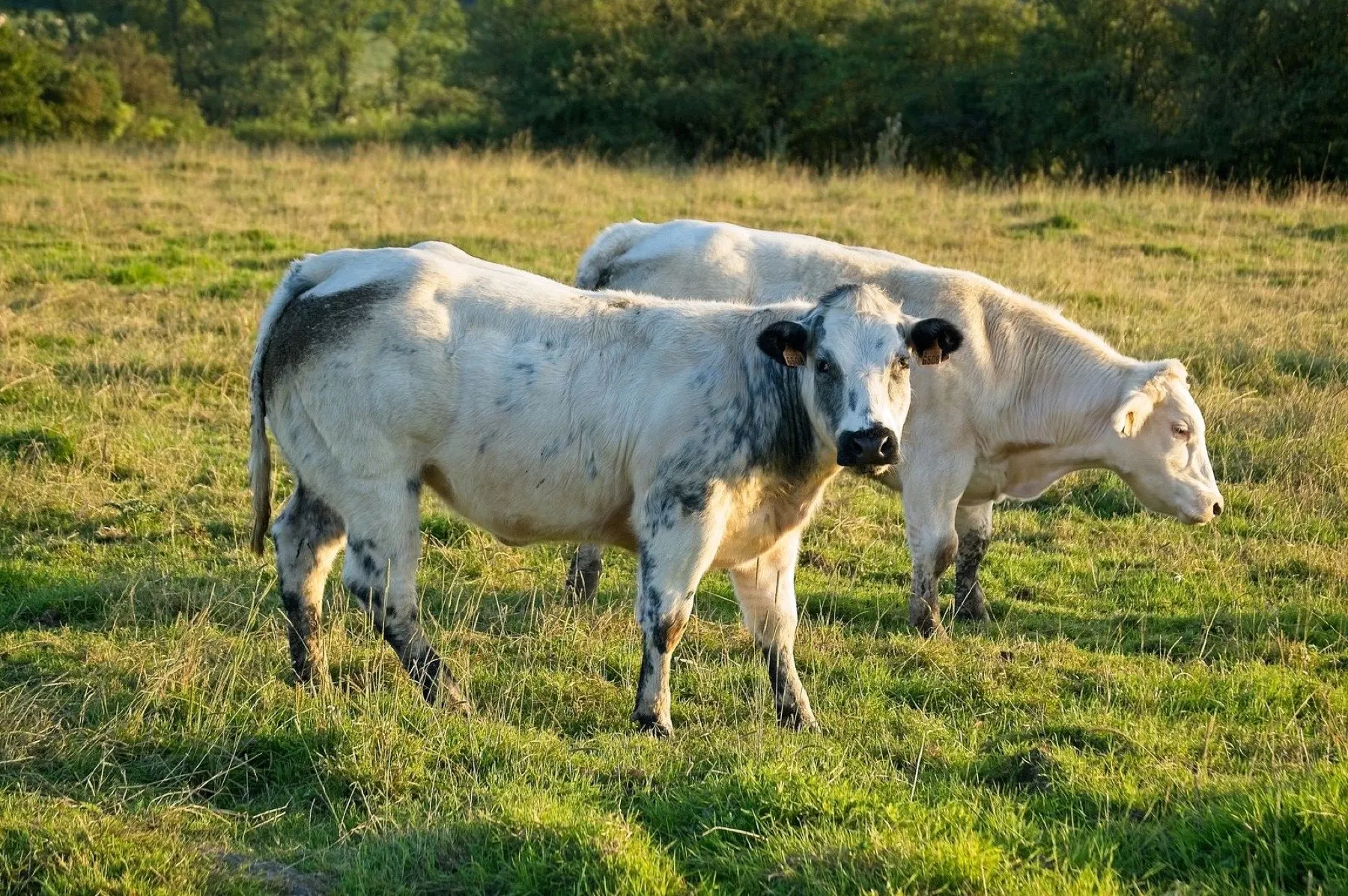
Locate the herd fast
See every cow's latest position on a live map, no more driving fields or rough grazing to find them.
Calving & welfare alerts
Movement patterns around calving, and a cow that goes still while the herd grazes on, are flagged so you can check her in time.
Out-of-field alerts
A broken fence or open gate shows instantly when a beast steps outside its paddock, before it reaches a road.
Theft recovery
Cattle moving together at night triggers an alert, with a live link you can hand to the police to recover stock.
Cow tracking devices: collars vs ear tags
There's no single best cow tracker. Cattle tracking collars give the most precise position; cattle tracking tags cover the whole herd for far less per head. Flockarewe runs both on one map, so you can put collars on the cows that matter most and tags on the rest.
Cattle tracking collars vs ear tags
Collars have bigger batteries and more sensors, so they suit larger cattle and longer use. Ear tags are smaller, lighter and cheaper per head, which makes them the practical way to track the whole herd.
GPS collar (4G)
- How it works
- Reports its own position over the mobile network
- Accuracy
- Precise GPS fix
- Signal
- Needs mobile coverage and a SIM per collar
- Best for
- Cows you watch closely, stock in transit or on agistment
GPS collar (LoRa)
- How it works
- GPS fix sent to your own on-farm gateway
- Accuracy
- Precise GPS fix
- Signal
- No mobile signal or SIM needed
- Best for
- Hill and rough grazing, key animals across a big holding
LoRa ear tag
- How it works
- Light tag heard by gateways around the farm
- Accuracy
- Paddock-level: which field, and whether it has strayed
- Signal
- No mobile signal or SIM needed
- Best for
- Tracking the whole herd at the lowest cost per head
Grazing beyond gateway range, on open hill or remote ground? A satellite (NTN) ear tag sends its position straight to satellite, so it needs no gateway and no mobile signal.
Tracking cows in the barn
GPS struggles under a roof, so housed cattle need a different approach. Bluetooth tags report to a gateway in or near the building, so you can see which animals are in which shed and spot one that has not moved. When the herd goes back out to grass, the same account switches to GPS on the map.
Cow location tracking in the barn works by proximity: each Bluetooth tag is heard by the gateway in the building it is in, so you know which shed or pen every cow is in without walking the rows. Farms use it to:
- find a cow quickly for AI or treatment
- spot a cow that has stopped moving or eating as normal
- keep watch on cows close to calving
Weighing them up? See our tracker comparison, read LoRa vs GPS livestock trackers, or browse the tags, collars and gateways we supply.
What a cattle tracking system includes
- Tags or collars: GPS collars, LoRa or satellite ear tags out at grass, and Bluetooth tags for housed cattle.
- A gateway or network connection: an on-farm LoRa gateway, the 4G mobile network, satellite, or a Bluetooth gateway in the shed, depending on the device.
- The Flockarewe app: every animal on one live map, with field boundaries and movement history.
- Alerts: email and push alerts when cattle leave a field, stop moving or move at night.
Virtual fencing (coming soon)
We are testing a solar-powered collar that uses sound and stimulus cues to keep cattle inside a boundary you draw on the map. It is in containment testing and not yet available on farms. Register your interestand we'll let you know when it is ready.
What cattle tracking costs
The honest comparison is pounds per animal per year, with everything in. Every cow tracking system has three costs: the device (collar or ear tag), the network (a SIM subscription per animal for 4G, or gateways you buy once for LoRa) and the software.
4G GPS collars carry hardware in the low hundreds of pounds plus a monthly SIM each, which is why few farms put one on every beast. LoRa ear tags on your own gateways keep the cost per head low enough to track the whole herd. Flockarewe is quoted for your holding and head count, with no feature tiers. See pricing, or our guides to what cattle tracking costs and livestock tracking costs per animal per year.
Get a quote for your herd
Tell us your herd size, how many hectares you graze and your postcode, and we'll quote a system for your farm.
Get a quote for your herd →Request a call backFor beef and dairy, paddock to open hill
Cattle range across big fields and rough grazing where mobile coverage is patchy. Flockarewe is built on LoRa, so ear tags report to on-farm gateways across the whole holding with no SIM per beast, and GPS collars give a precise fix on the animals you want to watch closely.
Draw each field as a paddock geofence, and every position is checked in real time. Strays, calving and herd movement surface as alerts, and Shep, the built-in AI farm dog, tells normal grazing from real trouble so you only hear about what matters.
Going further: cattle health monitoring, virtual fencing, and cattle tracking for US ranches. Also tracking sheep? See sheep tracking.
Cattle tracking, FAQs
How does cattle GPS tracking work?
A GPS collar or tag works out its own position from satellites, then sends it over a long-range network: LoRa to a gateway on your farm, the 4G mobile network, or satellite for the most remote ground. Flockarewe puts each position on the map, checks it against your field boundaries, and alerts you if a cow leaves a field or stops moving.
What's the difference between a cow tracking collar and an ear tag?
A collar has a bigger battery and more sensors, so it suits larger cattle and longer use, and gives the most precise position. An ear tag is smaller, lighter and cheaper per head, which makes it the practical choice for tracking a whole herd.
How do you track cattle?
Fit a GPS collar for precise live location, or a LoRa ear tag for low-cost paddock-level tracking. Both report into Flockarewe, which maps every beast, geofences your fields, and alerts you when one strays.
What is the best cow tracking device?
It depends on the job. A GPS collar gives the most precise position for the cows you watch closely; a LoRa ear tag is the cheapest way to cover a whole herd. Most farms use tags across the herd and collars on a few key animals, all on one map.
Do cattle trackers work without mobile signal?
Yes. LoRa ear tags and collars report to on-farm gateways, covering fields and rough grazing with no mobile signal and no SIM per animal. Beyond gateway range, a satellite (NTN) ear tag sends its position straight to satellite. 4G collars use the mobile network where you have it.
How much does cattle tracking cost?
It depends on your herd size, the mix of ear tags and collars, and how much of your ground needs coverage, which sets the number of gateways. Every system has three costs: the devices, the network and the software. We quote each farm individually.
Can it alert me when a cow is calving?
Movement changes around calving and a beast going unusually still are surfaced as alerts, so you can check a cow that may be calving or in trouble.
How accurate is it?
GPS collars give a precise fix; LoRa ear tags give a paddock-level position based on which gateways hear them, enough to know which field a beast is in and whether it's strayed.
Can cattle trackers do virtual fencing?
Paddock geofences alert you the moment a beast leaves a field. A solar virtual fencing collar that uses sound and stimulus cues to keep cattle inside a boundary is in testing and not yet available; you can register your interest with us.
Can you track cattle inside a barn?
Yes. GPS doesn't work well indoors, so housed cattle wear Bluetooth tags that report to a gateway in or near the shed. You can see which animals are in which building and spot one that has not moved. Out at grass, the same animals show on the GPS map.
Can I use collars and ear tags together?
Yes. Flockarewe runs every tag on one map, so many farms put GPS collars on the cows they watch most closely and LoRa ear tags on the rest of the herd.
Can I track a whole herd affordably?
Yes, LoRa ear tags keep per-animal cost low and one gateway covers many beasts, so tracking a full herd is far cheaper than a cellular collar on every animal.
Start tracking your herd
Tag a few beasts or the whole herd, Flockarewe scales with you.
Get started →