How LoRa Ear Tags Track Cattle & Sheep Across the Whole Farm
3 June 2026 · 7 min read
The problem with tracking livestock has always been coverage and cost. Mobile (4G) collars need a signal and a SIM per animal, fine near town, useless in a valley, and far too expensive to put on a whole flock. LoRa changes the maths.
Tracking a herd? See cattle tracking tags and collars for how the two work together on cattle.
What LoRa actually is
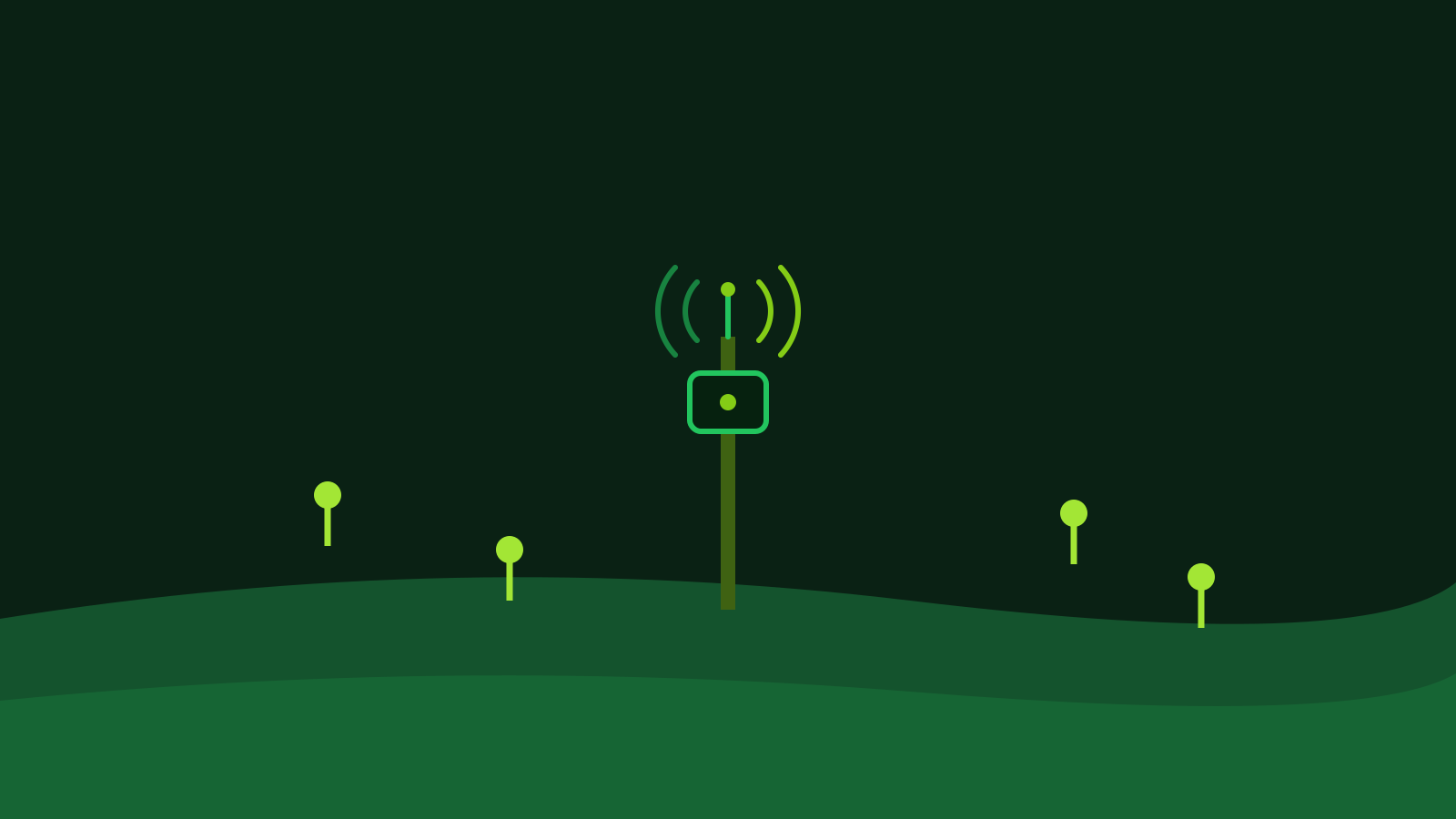
LoRaWAN is a long-range, low-power radio network, and crucially, one you own. You put up a few gateways (often solar) and they listen for tiny, infrequent messages from tags up to a couple of kilometres away, with no mobile signal involved. Hills and trees cut that down, so the number of gateways is set by your acreage and how broken it is.
- Range: roughly 2 km from a tag to a gateway in open country, less through hills and trees, so large ground needs several gateways.
- Power: a tag sips so little that a coin cell lasts months to years.
- Cost: tags are cheap enough to put on every animal, with no per-animal SIM.
- Yours: no carrier, no monthly data, the gateways are your infrastructure.
How a position is worked out
GNSS collars carry their own GPS and report an exact fix. Lighter ear tags don't need GPS, they're located by which gateways hear them and how strongly, giving a paddock-level position that's perfect for 'is this animal where it should be?'.
Tip, A common setup: LoRa ear tags on the whole mob for coverage, GNSS collars on bulls/studs/lead cows for pinpoint location, and 4G collars on anything that travels off-farm.
Flockarewe ingests it all the same way, your ChirpStack gateways forward to one webhook, and every animal lands on a single live paddock map.
Keep your stock in sight
Tag your stock with LoRa ear tags and collars, watch every paddock on one map, and let Shep flag trouble, all from one app.